
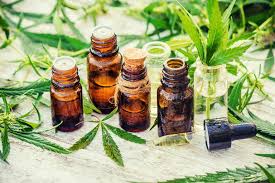
When shopping for CBD oil, one of the first things you may notice is the range of strengths available. Some products contain a relatively small amount of CBD, while others are much more concentrated. This can make choosing the right product confusing, especially for beginners.
Understanding CBD oil potency can help you read product labels, compare different products, and understand how much CBD a bottle actually contains. Terms such as CBD concentration, milligrams (mg), strength, serving size, and total CBD content are commonly used, but they do not always mean the same thing.
In this guide, we will explain how CBD oil potency works, how to calculate CBD concentration, how bottle size affects strength, and what to look for when comparing CBD oils.
What Does CBD Oil Potency Mean?
CBD oil potency refers to the concentration or amount of cannabidiol (CBD) present in a product.
CBD, short for cannabidiol, is one of the naturally occurring cannabinoids found in hemp and cannabis plants. CBD products can come in different formulations and concentrations.
For example, a bottle may contain:
- 300 mg CBD
- 600 mg CBD
- 1,000 mg CBD
- 1,500 mg CBD
- 2,000 mg CBD or more
The number usually represents the total amount of CBD in the entire bottle, rather than the amount in each drop or serving.
This is an important distinction.
A 30 mL bottle containing 1,000 mg of CBD is more concentrated than a 60 mL bottle containing the same 1,000 mg of CBD.
CBD Strength vs CBD Concentration
The terms “strength” and “concentration” are often used interchangeably, but understanding the difference can make product comparisons easier.
CBD strength usually refers to the total amount of CBD in a bottle or the general potency category used by a manufacturer.
CBD concentration refers to how much CBD is present relative to the total volume of the product.
For example, imagine two bottles:
- Bottle A: 500 mg CBD in 30 mL
- Bottle B: 500 mg CBD in 60 mL
Both bottles contain 500 mg of CBD overall. However, Bottle A has twice the concentration because the same amount of CBD is contained in half the volume.
This is why looking only at the total milligrams on the front of the bottle can be misleading.
How Is CBD Oil Concentration Calculated?
Calculating CBD concentration is relatively simple.
Use this formula:
CBD concentration = Total CBD in the bottle ÷ Total liquid volume
For example, suppose you have a 30 mL bottle containing 600 mg of CBD.
600 mg ÷ 30 mL = 20 mg of CBD per mL
This means each 1 mL of oil contains approximately 20 mg of CBD.
Now consider a 60 mL bottle containing the same 600 mg of CBD:
600 mg ÷ 60 mL = 10 mg of CBD per mL
Although both products contain 600 mg of CBD, the first product is twice as concentrated.
Why Bottle Size Matters
Bottle size is an important factor when comparing CBD oils.
A larger bottle does not necessarily mean a stronger product. It may simply contain more liquid.
For example:
| Bottle Size | Total CBD | Approx. CBD per mL |
|---|---|---|
| 30 mL | 300 mg | 10 mg/mL |
| 30 mL | 900 mg | 30 mg/mL |
| 30 mL | 1,500 mg | 50 mg/mL |
| 60 mL | 600 mg | 10 mg/mL |
| 60 mL | 1,200 mg | 20 mg/mL |
The key point is that total CBD and CBD concentration are different measurements.
When comparing products, look at both.
Understanding CBD Per Serving
Another important number is the amount of CBD per serving.
A manufacturer may define one serving as a particular volume, such as 1 mL. However, serving sizes can vary between products.
If a product contains 20 mg of CBD per mL and the label defines 1 mL as one serving, that serving contains approximately 20 mg of CBD.
But if the serving is 0.5 mL, the amount would be approximately 10 mg.
This is why it is important to check the product’s serving-size information rather than assuming that one dropper always equals one full serving.
How Many Drops Are in CBD Oil?
This is one area where beginners often become confused.
A dropper may hold approximately 1 mL, but the exact amount can vary depending on the bottle and dropper design. A “drop” is also much smaller than a full dropper.
Because drop size can vary, it is generally more reliable to use the manufacturer’s stated measurements and markings on the dropper instead of trying to calculate potency based on individual drops.
For example, if a bottle contains 30 mL and 600 mg of CBD:
600 mg ÷ 30 mL = 20 mg/mL
If the dropper is designed to measure 1 mL, that full measured amount would contain approximately 20 mg of CBD.
Does Higher CBD Potency Mean Better Quality?
Not necessarily.
A higher-potency CBD oil simply contains more CBD relative to its volume. It does not automatically mean that the product is higher quality.
Quality depends on several factors, including:
- Ingredient quality
- Manufacturing standards
- Accurate labeling
- Product testing
- Extraction and formulation methods
- Storage conditions
- Transparency from the manufacturer
A lower-potency product from a reputable manufacturer may be preferable to a highly concentrated product with unclear labeling or poor quality controls.
The goal should be to understand what you are buying rather than automatically choosing the highest number.
Why Do CBD Products Come in Different Strengths?
People have different preferences and needs, which is one reason manufacturers offer CBD oils at different concentrations.
Lower-concentration products may allow consumers to measure smaller amounts of CBD more easily. Higher-concentration products contain more CBD in each milliliter, meaning less oil may be needed to provide the same labeled amount of CBD.
However, individual responses to CBD can vary, and product labels should be followed carefully.
For anyone considering CBD for a specific health concern or who takes medications, discussing CBD use with a qualified healthcare professional is a sensible step.
Low, Medium, and High-Potency CBD Oil
CBD products are sometimes informally categorized as low, medium, or high potency. There is no universal industry standard for these categories, so definitions can vary between brands.
As a general way of understanding product labels, you might see:
1. Lower-Potency CBD Oil
These products contain a smaller amount of CBD per mL.
They may appeal to people who prefer products with lower concentrations or who want more flexibility when measuring their intake.
2. Medium-Potency CBD Oil
Medium-strength products provide a higher CBD concentration per mL and are common among consumers who want a more concentrated formulation.
3. High-Potency CBD Oil
High-potency products contain substantially more CBD per mL.
Because the concentration is higher, careful measurement becomes particularly important.
The terms “low,” “medium,” and “high” should always be considered alongside the actual milligrams per mL rather than taken at face value.
How to Compare Two CBD Oils
Suppose you are comparing two products.
Product A: 1,000 mg CBD in 30 mL
Product B: 1,000 mg CBD in 60 mL
At first glance, they appear identical because both contain 1,000 mg of CBD.
But their concentrations are different.
Product A:
1,000 ÷ 30 = 33.3 mg/mL
Product B:
1,000 ÷ 60 = 16.7 mg/mL
Product A is approximately twice as concentrated.
This example demonstrates why checking only the total CBD content is not enough.
CBD Percentage: What Does It Mean?
Some CBD oils may display CBD concentration as a percentage rather than only in milligrams per milliliter.
A commonly used approximation is:
1% CBD ≈ 10 mg CBD per mL
Using this relationship:
- 1% ≈ 10 mg/mL
- 2% ≈ 20 mg/mL
- 3% ≈ 30 mg/mL
- 5% ≈ 50 mg/mL
Exact labeling conventions can vary, so the manufacturer’s stated concentration should always be checked.
Percentage labeling can be useful, but many consumers find mg/mL easier to understand when comparing products directly.
What Is the Difference Between CBD Content and CBD Concentration?
These terms are worth remembering.
CBD content = the total amount of CBD in the entire product.
CBD concentration = the amount of CBD relative to the volume of the product.
For example, a 30 mL bottle containing 900 mg of CBD has:
Total CBD: 900 mg
Concentration: 30 mg/mL
If the same 900 mg were placed in a 60 mL bottle, the total CBD would remain 900 mg, but the concentration would fall to 15 mg/mL.
Understanding this difference makes it much easier to compare CBD products.
Why Third-Party Testing Matters
CBD potency information is most useful when the product’s label accurately reflects its contents.
This is where third-party laboratory testing can provide additional transparency.
A reputable CBD company may provide a Certificate of Analysis (COA) showing laboratory results for a particular product batch. Depending on the testing panel, the report may provide information about cannabinoid content and may also test for contaminants.
When evaluating a product, consumers can look for:
- Batch-specific testing
- Clearly identified cannabinoid levels
- Accessible laboratory reports
- Consistent product labeling
- Information about testing laboratories
Testing does not make a product automatically appropriate for everyone, but it can help consumers make more informed purchasing decisions.
Common Mistakes When Comparing CBD Potency
Understanding CBD strength becomes easier when you know what mistakes to avoid.
1. Looking Only at Total Milligrams
A bottle with 2,000 mg of CBD may sound stronger than one with 1,000 mg, but bottle volume matters.
Always compare CBD per mL as well.
2. Assuming a Bigger Bottle Is Stronger
A larger bottle contains more liquid, but that does not necessarily mean it contains more CBD per mL.
3. Assuming Higher Potency Is Always Better
More concentrated does not automatically mean better.
The appropriate product depends on individual circumstances, preferences, and the manufacturer’s formulation.
4. Confusing CBD With Total Cannabinoid Content
Some products contain multiple cannabinoids. A label showing total cannabinoid content is not necessarily the same as the amount of CBD alone.
Look specifically for the amount of CBD.
5. Ignoring the Serving Size
Two products with the same CBD concentration can have different suggested serving sizes.
Read the complete label before comparing products.
How to Read a CBD Oil Label
A CBD oil label should provide useful information about the product.
When comparing CBD oils, look for:
Total CBD: How many milligrams of CBD are in the entire bottle?
Bottle volume: How many milliliters of oil are included?
CBD concentration: How many milligrams of CBD are present per mL?
Serving size: How much product does the manufacturer consider one serving?
Ingredients: What other ingredients are included?
Batch information: Can the product be traced to a specific production batch?
Testing information: Is third-party laboratory testing available?
These details can help you compare products more accurately.
Does CBD Potency Affect How Much Oil You Need?
CBD concentration determines how much CBD is present in a given volume of oil.
For example, a product containing 10 mg/mL provides less CBD per milliliter than a product containing 40 mg/mL.
However, this does not mean consumers should automatically choose a high-potency product or increase their intake.
CBD can interact with medications, and individual responses vary. Anyone considering CBD, particularly people taking prescription medicines, pregnant or breastfeeding individuals, or people with underlying health concerns, should seek advice from a qualified healthcare professional.
How to Choose a CBD Oil Strength
There is no single CBD oil strength that is best for everyone.
Instead of focusing only on the highest concentration, consider:
- The product’s CBD content
- CBD concentration per mL
- Bottle size
- Serving information
- Ingredient list
- Third-party testing
- Manufacturer transparency
- Your individual circumstances
Choosing a product based on clear information is generally more useful than choosing one simply because it has the largest number on the label.
Also Read: CBD Oil and the Entourage Effect: Why Cannabinoids Matter
Final Thoughts
Understanding CBD oil potency makes it easier to compare products and interpret CBD labels.
The most important numbers to understand are total CBD, bottle volume, CBD concentration, and CBD per serving. A product with a higher total CBD amount is not necessarily more concentrated, and a larger bottle does not automatically mean greater potency.
For a clearer comparison, calculate the amount of CBD per milliliter and review the complete product label. Look for transparent manufacturers that provide accurate information and, where available, independent laboratory testing.
Most importantly, remember that higher potency does not automatically mean better quality or better results. A thoughtful approach to CBD starts with understanding the product rather than simply choosing the strongest option available.